
VCH Hampshire Publications
“The Victoria County History series of paperback parish and urban histories aims to publish high-quality research in an accessible format, and to inspire readers to get involved with VCH projects in their own localities. Each history makes a new contribution to the Victoria County History, which was founded in 1899 and is recognised as the greatest research and publishing endeavour in local history.”
Victoria County History
Since new research began in the Basingstoke area, six parishes and urban histories (Shorts) have been published in modern VCH style. A brief precis of each book’s cover material is given below.
Other Shorts, including Nately Scures, Newnham and Up Nately with Andwell and Hook and Old Basing will appear in due course.
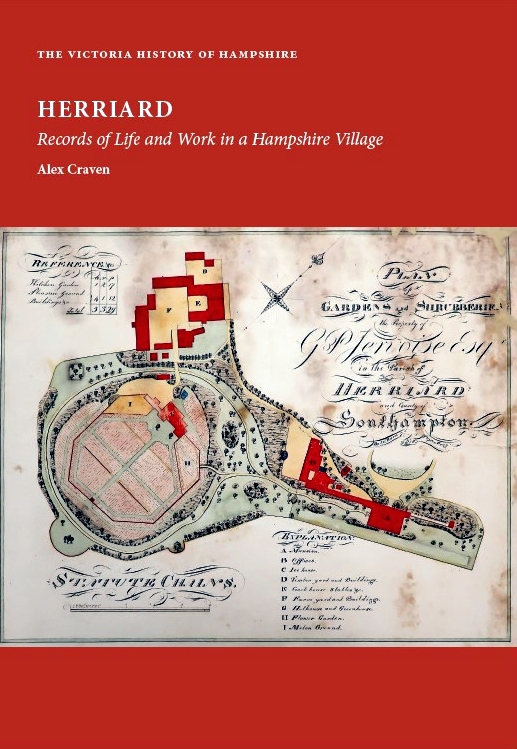
Herriard, Records of Life and Work in a Hampshire Village
Alex Craven
University of London, 2025
At the heart of the parish of Herriard, 4 miles south east of Basingstoke, lies Herriard House, the home for four centuries of the Jervoise family, who founded the parish church and built a mansion within grounds landscaped by Humphrey Repton. The book draws upon the unique Jervoise archive, containing over 250,000 items, and turns this rural parish into something extraordinary for the local historian, permitting us to see life there in remarkable detail.
It includes ordinary parishioners as it explores the social, economic and religious history of Herriard: their homes, their work, their worship. It provides examples of agricultural improvement and model farms, complex relationships between master and servant, a short-lived light railway, a rogue who almost destroyed the estate, and much more.
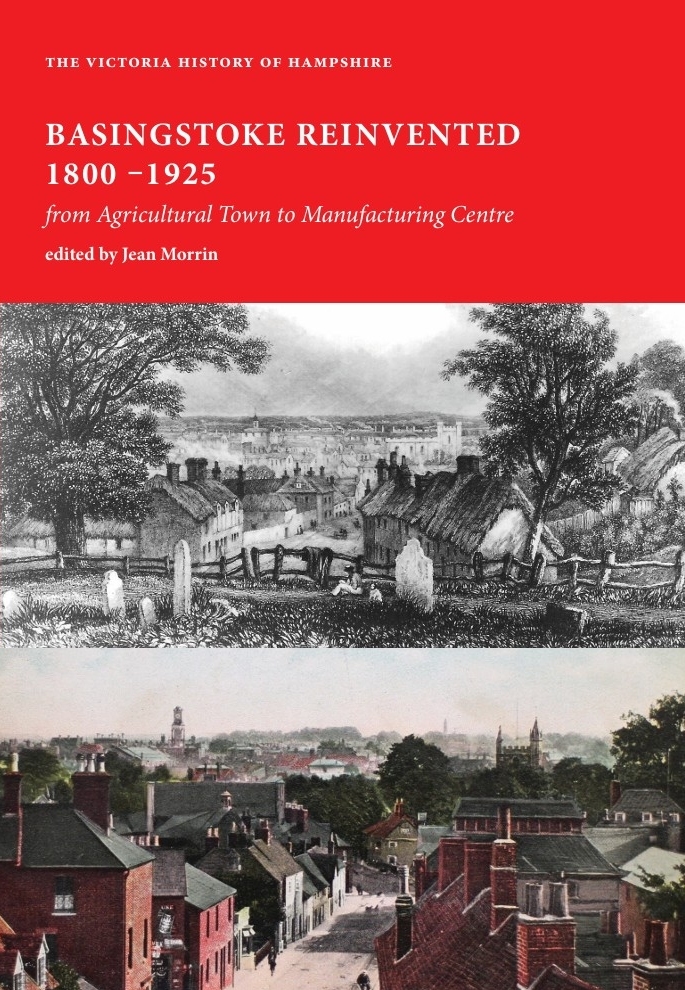
Basingstoke Reinvented 1800-1925
from Agricultural Town to Manufacturing Centre
edited by Jean Morrin
University of London, 2025
The book describes the dramatic transformation of a small southern market town into a major manufacturing centre producing goods for national and international markets, from clothing manufacture (Thomas Burberry), through heavy agricultural and road building machinery (Wallis and Steevens) to lorries and trucks for civilian and military use in WW1 (Thornycroft), together with all the associated trades and services. Also described are the resultant demographic and social changes.
All relied on the railways for the supply of raw materials and the movement of finished products, leading to profound changes in the town itself. The study of this industrialisation contributes to a debate about how far manufacturing developed in southern towns after its initial establishment in the north of England and Scotland.
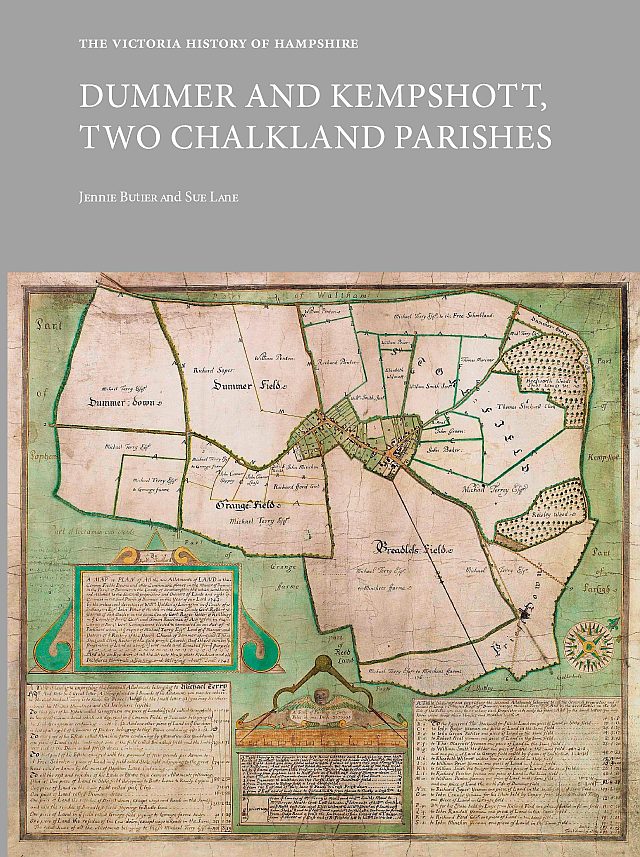
Dummer and Kempshott, Two Chalkland Parishes
Jennie Butler and Sue Lane
University of London, 2022
Dummer, a small parish on the chalk downlands south of Basingstoke, has a rich and well-documented history which is of interest to a wide audience beyond Hampshire. Manorial records from the 16C onwards provide a fascinating account of communal farming practices before enclosure … in 1743. The parish was distinguished by an unusual level of protestant and non-conformity in the late 17C, followed by a strongly evangelical outlook … The diaries of lord of the manor, Stephen Terry … are excellent exemplars of the value of personal testimony in local history. Read about Jane Austen, the Swing Riots, emancipated enslaved Africans, trade unionists and the residencies and activities of royal family members.
The book provides a captivating picture of life throughout the centuries in small farming communities – largely self-contained yet not untouched by outside or national events.
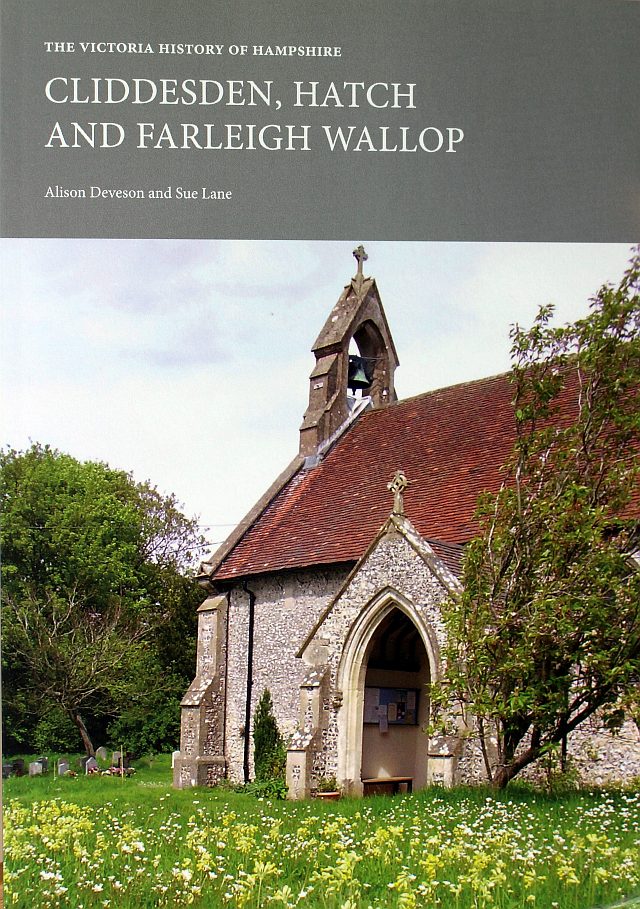
Cliddesden, Hatch and Farleigh Wallop
Alison Deveson and Sue Lane
University of London, 2018
Two small, closely-linked parishes on the chalk downland south of Basingstoke, and the abandoned parish, Hatch. Each has a common manorial descent from the 15C … managed as part of a single estate by the Wallop family from their seat at Farleigh House. This volume describes development of the manorial estate and much more about the lives and activities of ordinary people living and working in the settlements. It also describes religious and social history and activities, along with the unusually well-recorded school …
The book provides a fascinating picture of rural life as it was, and has become in the 21C, largely a home for commuters with farming undertaken from one centre across nearly all of the land … Hatch being absorbed into the ever-growing Basingstoke.
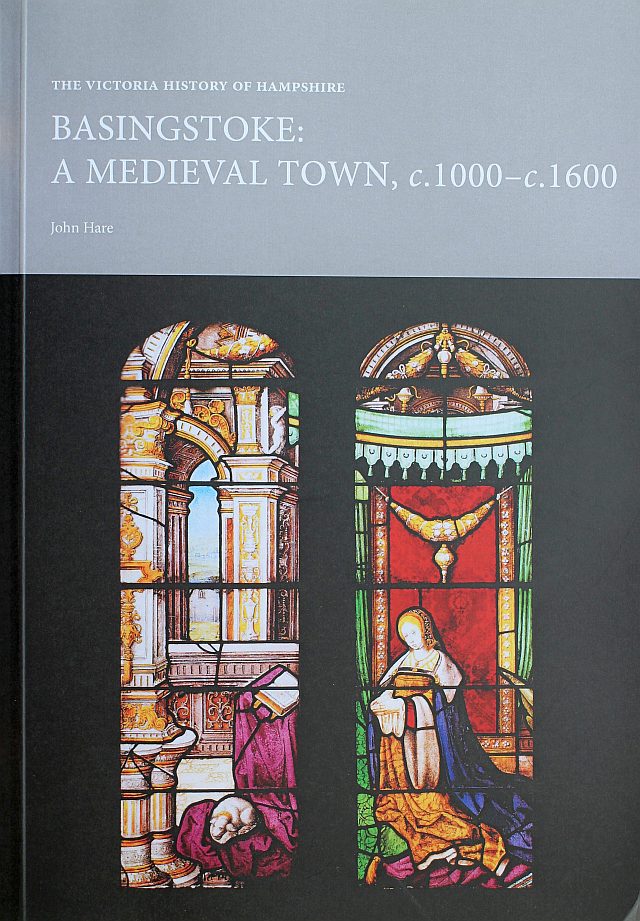
Basingstoke: a Medieval Town, c.1000-c.1600
John Hare
University of London, 2017
Basingstoke is often seen as a very modern town … In reality it has a long, rich and prosperous history .. c1000 it became a significant market centre and a place on the route to London from the west. By 1500 it was among the top 60 towns in England by wealth, and a major industrial area, whose manufactured cloths formed part of international patterns of trade. It is well-documented and should provide a useful addition to the limited number of studies of small medieval towns.
Much of the old town has been swept away by the shopping centre, but something of the medieval footprint remains in its streets, a few surviving buildings and its magnificent church. The book examines all these as well as the dynamic families involved in its new thriving economy and its expansion.
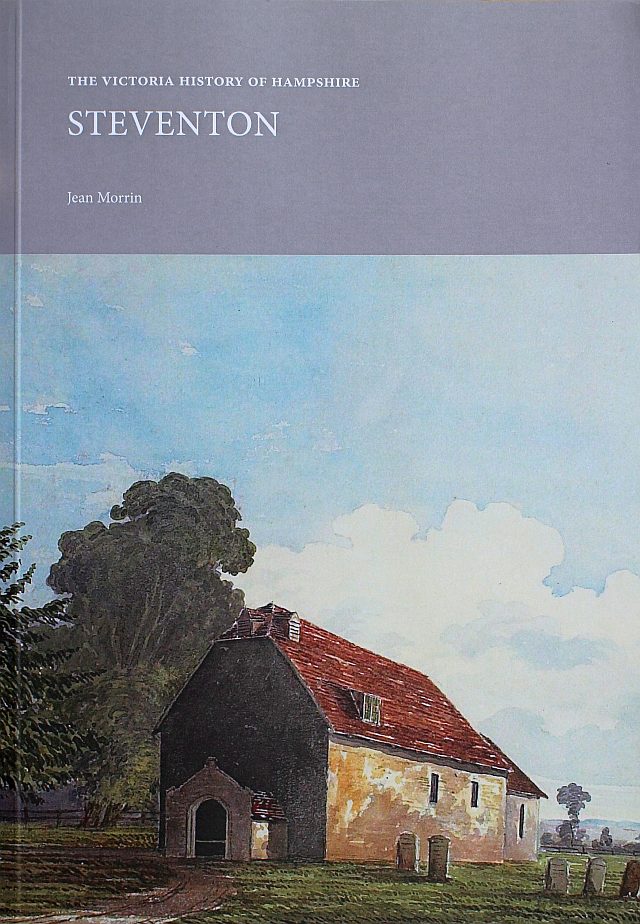
Steventon
Jean Morrin
University of London, 2016
A chalkland village, best known because Jane Austen spent the first 25 years of her life here. Unlike Chawton and Bath, nothing in the author’s memory commemorates Steventon, but this new history explains how family life and observations of north Hampshire shaped her early life … She wrote early versions of three of her novels between 1796 and 1798, drawing on local society for characters, manner and sentiments.
But the village itself has a rich history. Steventon is a typical southern chalkland settlement … the book provides examples of downland agriculture and improvement, a scandalous landlord, driven out by his son and excommunicated, a new Victorian manor house …It discusses the social, economic and religious lives of ordinary people and lords of the manor.
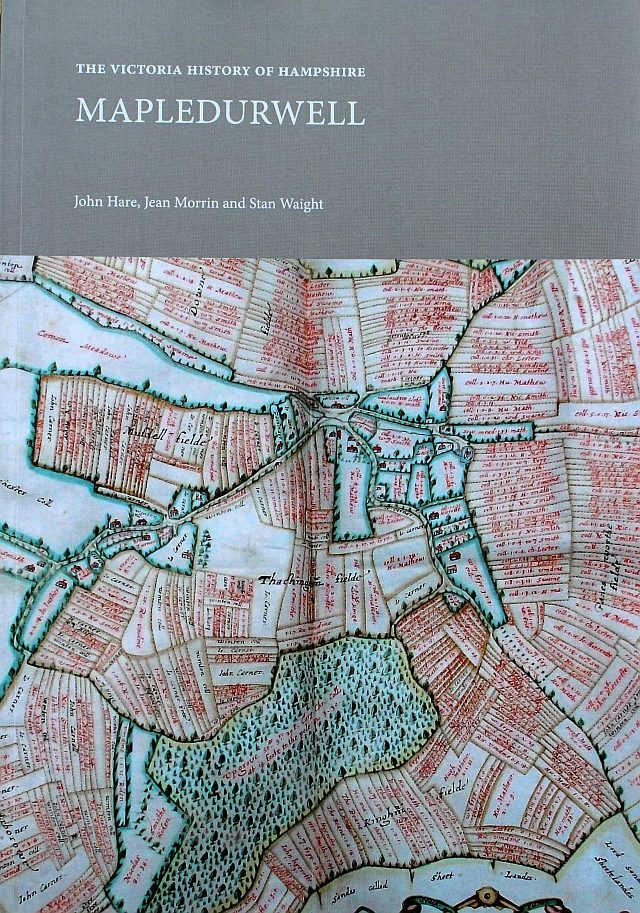
Mapledurwell
John Hare, Jean Morrin and Stan Waight
University of London, 2012
Our first parish history, transformed to the modern style. It includes much more about the village itself, its economy and society, highlighting the lives of ordinary people as well as those who owned the parish’s land and property. It discusses Quakers and Congregationalists, as well as the established church … it looks at the history of elementary education, revealing appalling sanitary conditions suffered by pupils at the local school.
Mapledurwell is typical of Hampshire downland parishes, in which the present-day landscape reflects the earlier open field system. The Domesday-recorded village is rural and picturesque with many timber-framed cottages, the oldest being 15C … The book explores a close reading of records of early land ownership, and how it developed from an agricultural community to a modern commuter village, with only one working farm. It establishes a model for the history of other rural parishes in Hampshire.
You can buy our books from :
The Willis Museum, Basingstoke Basingstoke Discovery Centre The Hampshire Record Office
(see our Resources page)
You can also obtain copies by Contacting us directly